Know Your Boat: The Complete Owner's Masterclass
Everything You Need to Become a Truly Confident, Capable & Informed Boat Owner
Setting Sail on a New Journey
There is a moment every boat owner knows well. You are standing in the cockpit, lines coiled, engine ticking over, and the water stretching out ahead of you — and you realise that the vessel beneath your feet is far more complex, far more fascinating, and far more demanding than you ever imagined when you first stepped aboard. That moment is not intimidating. It is the beginning of a real education.
This series — Know Your Boat: The Complete Owner's Masterclass — is built for exactly that moment. Whether you own a 28-foot fibreglass sloop, a twin-engine motor cruiser, or a bluewater catamaran, this is the series that will transform the way you understand, manage, maintain, and ultimately love your vessel.
What This Series Covers
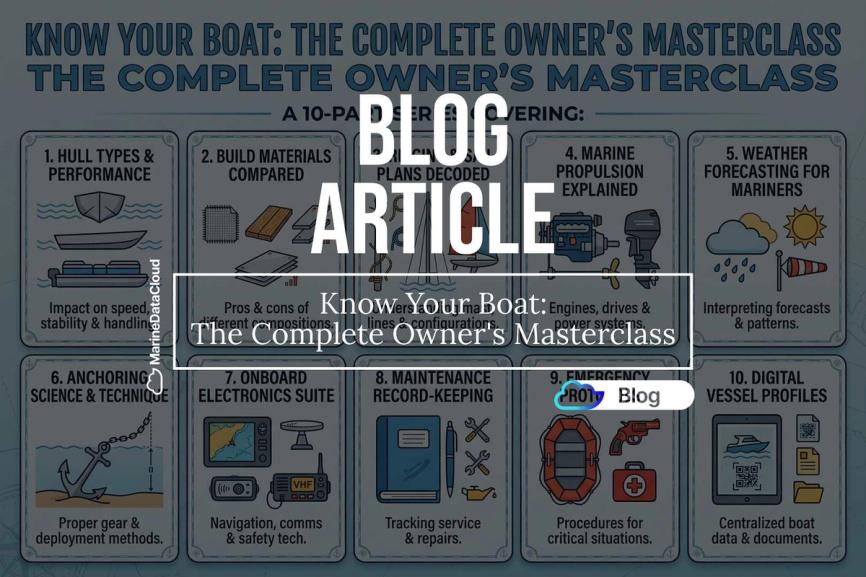
Over ten carefully structured posts, we will take you on a comprehensive technical voyage through every dimension of recreational boat ownership. We begin where all great seamanship begins — with the hull. From displacement and planing hull forms to the eternal debate between monohull and multihull, Post 1 lays the structural foundation for everything that follows.
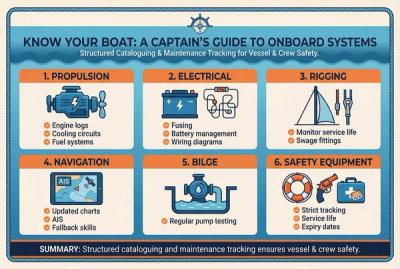
From there, we move above and below the waterline in equal measure. Post 2 examines the materials your boat is built from — fibreglass (GRP), marine-grade aluminium, cold-moulded timber, and carbon fibre composites — giving you the metallurgical and material knowledge to make genuinely informed decisions about purchase, repair, and long-term care. Post 3 takes you aloft into the world of rigs and sail plans — sloops, ketches, schooners, and cutters — whilst Post 4 descends into the engine room to demystify marine propulsion systems from traditional diesel inboards to the rising tide of electric and hybrid drives.
The series then broadens its horizon. Post 5 gives you the meteorological literacy to read marine weather forecasts like a professional mariner — GRIB files, synoptic charts, Beaufort Scale states, and beyond. Post 6 is a masterclass in anchoring — anchor types, scope ratios, seabed compositions, and the science of holding ground in challenging conditions. Post 7 navigates the world of modern onboard electronics, from chartplotters and AIS transponders to NMEA 2000 networking and full nav-station integration.
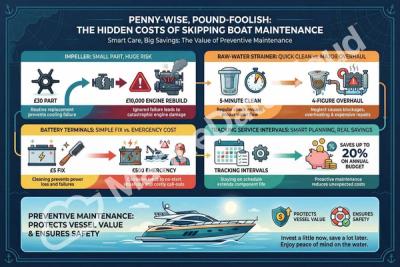
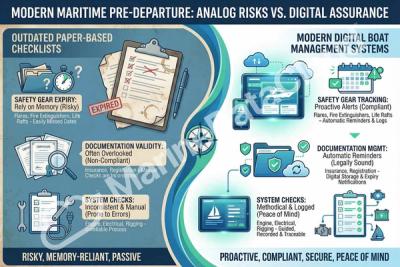
The final three posts are where the series reaches its most powerful conclusions. Post 8 makes a compelling case for meticulous maintenance record-keeping as a core seamanship skill. Post 9 confronts the realities of onboard emergencies — man overboard, fire, and flooding — with authority and clarity. And Post 10 brings the entire masterclass home with the definitive argument for building a complete, centralised digital vessel profile that puts every piece of critical boat data securely in one place.
Why This Series Matters
The recreational boating world is evolving rapidly. Modern vessels are more technically sophisticated than ever before, blending traditional naval architecture with cutting-edge composite materials, digital navigation systems, and hybrid propulsion technologies. Yet the gap between what most recreational boat owners know about their vessels and what they should know remains surprisingly wide.
This series is designed to close that gap — post by post, topic by topic — building your knowledge from the keel up. Every article is written for the serious recreational boater: the skipper who is not satisfied with simply operating a vessel, but who wants to understand it, maintain it with confidence, and document it with the rigour of a professional mariner.
Because the best skippers have always known that knowledge is not just power — at sea, knowledge is safety.
Summary: Key Takeaways
- Hull design, build materials, and rig configuration are the three pillars of understanding any vessel — and the foundation of this series.
- Marine propulsion, weather literacy, and anchoring mastery are the practical seamanship skills that separate confident skippers from anxious ones.
- Onboard electronics and digital navigation are now core competencies, not optional extras, for the modern recreational boater.
- Maintenance record-keeping and emergency preparedness are the two most underestimated aspects of responsible boat ownership.
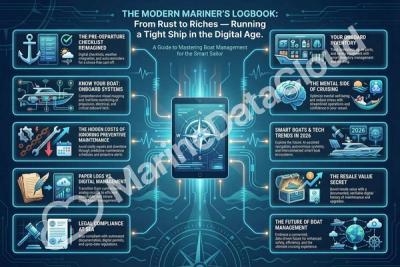
- A centralised digital vessel profile — housing all specifications, service records, documentation, and voyage data — is the 21st-century evolution of the ship's log, and the smartest investment any boat owner can make in the long-term management of their vessel.
Stay aboard. The masterclass starts now.