Know Your Boat: A Captain's Guide to Onboard Systems
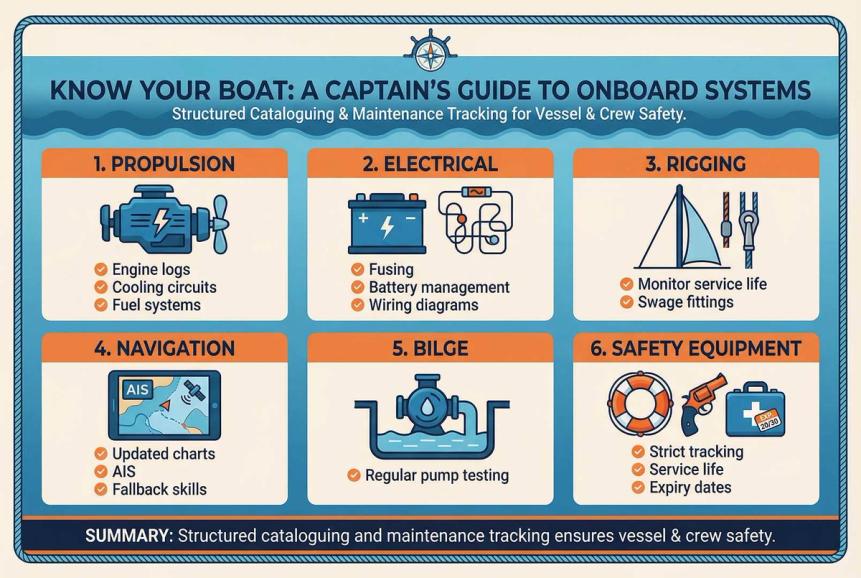
Every System Aboard Has a Story — Do You Know Yours?
The Anatomy of a Modern Recreational Vessel
Every seasoned mariner will tell you the same thing: the sea rewards preparation and punishes ignorance. Whether you're skippering a 30-foot sailing cruiser across the Adriatic or handling a twin-engine motorboat along the Dalmatian coast, understanding every sub-system aboard your vessel isn't a luxury reserved for engineers — it's the foundation of seamanship, safety, and survival.
A modern recreational boat is a complex ecosystem of interdependent systems. Like the rigging of a tall ship where a single frayed line can compromise the entire rig, each onboard system is connected to the next. Neglect one, and you risk compromising the whole vessel. Let's chart a course through the essential systems every boat owner should know, respect, and actively maintain.
The Propulsion System: Your Engine Room Intelligence
The marine engine — whether inboard diesel, outboard petrol, or hybrid electric — is the heartbeat of your vessel. Understanding your engine means knowing its service intervals, coolant levels, impeller condition, fuel filters, and raw water intake. A diesel engine starved of coolant doesn't give second chances; neither does a fouled fuel injector mid-passage.
Key sub-components to monitor include:
- Raw water cooling circuit — impeller replacement cycles are critical
- Engine mounts and alignment — vibration is an early warning signal
- Drive belts and zincs (sacrificial anodes) — overlooked but essential
- Exhaust manifolds and wet exhausts — corrosion accelerates in saltwater environments
Regular engine log entries — hours run, oil changes, temperatures, RPM readings — create a historical record that identifies patterns before they become problems.
Electrical Systems: The Nervous System of Your Boat
Marine electrical systems are among the most misunderstood and most dangerous onboard. A 12V or 24V DC system powers everything from navigation lights and chart plotters to bilge pumps and VHF radios. AC shore power and inverter systems add further complexity aboard larger vessels.
Critical areas of awareness include:
- Battery banks and charging circuits — know your battery types (AGM, lithium, gel) and their charge profiles
- Fuse panels and circuit breakers — the first line of defence against electrical fires
- NMEA 2000 and signal networks — modern vessels use data networks connecting instruments, autopilots, and AIS transponders
- Bonding and grounding systems — essential for corrosion prevention and lightning protection
Electrical fires are among the leading causes of vessel loss. A documented wiring diagram, regular terminal inspections, and a proper fuse inventory are non-negotiable elements of responsible boat ownership.
Rigging and Deck Systems: The Architecture of Sail
For sailing vessels, the standing and running rigging represent one of the most safety-critical systems aboard. Standing rigging — shrouds, forestay, backstay — holds the mast in column under enormous compressive loads. Running rigging — halyards, sheets, control lines — must operate flawlessly under pressure.
What every skipper should catalogue:
- Rigging age and material — stainless wire, rod rigging, or synthetic fibre each have different service life expectations
- Swage fittings and toggle pins — points of hidden fatigue and corrosion
- Chainplates and deck hardware — stress points that require regular inspection
- Sail condition and UV deterioration — reefing systems must be fully operational before offshore passages
Even powerboat owners must manage deck hardware, windlasses, mooring cleats, and davit systems — all subject to load cycling and corrosion in the marine environment.
Navigation Systems: Your Electronic Helm
Modern recreational vessels rely on a layered navigation architecture combining traditional and electronic instruments:
- Chartplotter and GPS — primary navigation tool, but only as accurate as its chart data
- VHF radio and AIS transponder — collision avoidance and distress communication
- Depth sounder and log — situational awareness in coastal and anchorage navigation
- Autopilot systems — hydraulic or electric, with feedback from compass and GPS
Understanding your navigation suite extends beyond pushing buttons. Knowing update cycles for charts, how AIS data is interpreted, and how to operate in manual fallback mode when electronics fail are skills that separate competent navigators from passengers.
Bilge Systems: The Vessel's Vital Drain
The bilge system is your last line of defence against flooding — and yet it's frequently ignored until water appears underfoot. Every vessel should have a functional bilge pump (manual and automatic), a float switch in good working order, and a bilge that is inspected regularly for oil contamination, debris accumulation, and pump capacity.
Key considerations:
- Float switch testing — test monthly, replace every two seasons
- Pump capacity vs. intake rate — know whether your pump can manage a failing seal
- Bilge alarm systems — an audible or connected alert adds a vital layer of protection
A clean bilge isn't just good housekeeping. It allows early detection of oil leaks, raw water intrusion, and stuffing box weeping — all early indicators of developing mechanical issues.
Safety Equipment: Your Offshore Insurance Policy
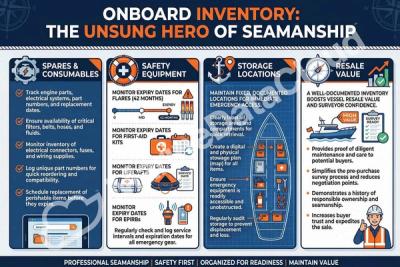
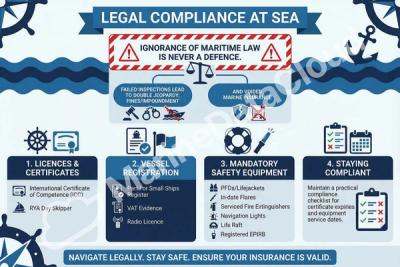
Safety gear isn't simply a regulatory checkbox — it's a carefully maintained system designed to function in the worst possible conditions. Every item has a service life, inspection interval, and certification requirement:
- Life jackets (PFDs) — auto-inflation mechanisms require annual servicing, gas cartridge replacement, and oral inflation testing
- EPIRB and PLBs — battery expiry dates and registration with maritime authorities are mandatory
- Flares and pyrotechnics — strictly time-limited, with specific carriage requirements by vessel class
- Life rafts — annual or biennial servicing, hydrostatic release inspection, and stowage conditions
- Fire extinguishers — pressure gauge checks, pin and seal inspections, and replacement cycles
Creating a safety equipment inventory with expiry tracking transforms a disconnected collection of gear into a coherent, auditable safety system — one that you can trust when it matters most.
Why Cataloguing and Maintenance Tracking Is the Modern Skipper's Compass
Understanding your onboard systems is the first voyage. The second — and arguably more valuable — is documenting, tracking, and managing that knowledge systematically.
A well-maintained boat is a safe boat. But maintenance is only effective when it's structured: knowing when the impeller was last changed, when the rigging was last surveyed, when flares expire, or when the bilge pump float switch was last tested requires more than memory — it demands a reliable system.
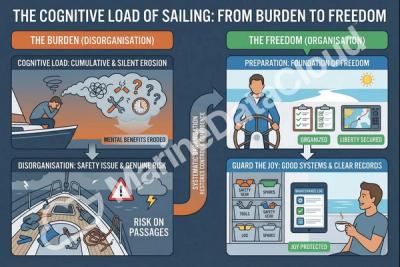
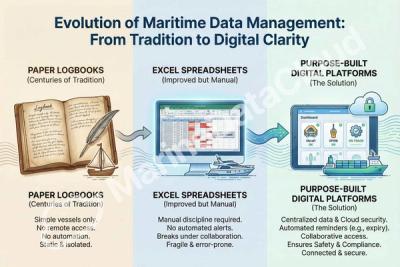
The most forward-thinking mariners today treat their vessels the way professional fleet operators do: with structured maintenance schedules, digital logbooks, inventory records, and document management that keep every system accountable. This approach doesn't just protect the vessel — it protects the people aboard, the resale value of the boat, and the owner's peace of mind.
Just as a navigator plots a course using reliable instruments rather than guesswork, a responsible boat owner manages their vessel's systems using organised, accessible records rather than hoping for the best. The horizon is always brighter when you know exactly what's behind you — and what needs attention before you set sail again.
Summary
- A modern recreational vessel operates through multiple interdependent systems: propulsion, electrical, rigging, navigation, bilge, and safety equipment.
- Each system has distinct service intervals, failure modes, and critical components that every skipper should understand.
- The marine engine requires documented hour logs, cooling circuit monitoring, and fuel system maintenance.
- Electrical systems are a leading cause of vessel loss — proper fusing, wiring documentation, and battery management are essential.
- Standing rigging has a finite service life; fatigue at swage fittings and chainplates is a common cause of dismasting.
- Navigation systems require updated charts, AIS registration, and manual fallback competency.
- Bilge systems must be tested regularly and kept clean to detect early signs of mechanical issues.
- Safety equipment is time-limited and must be inventoried, tracked, and serviced on strict schedules.
- The most effective way to manage all of this is through structured cataloguing and maintenance tracking — transforming good intentions into a reliable, repeatable system that keeps vessel and crew safe.