The Future of Boat Management: One App to Rule Them All
Digital Boat Management: The Complete Modern Mariner's Navigation System
The Evolution of Maritime Data Management
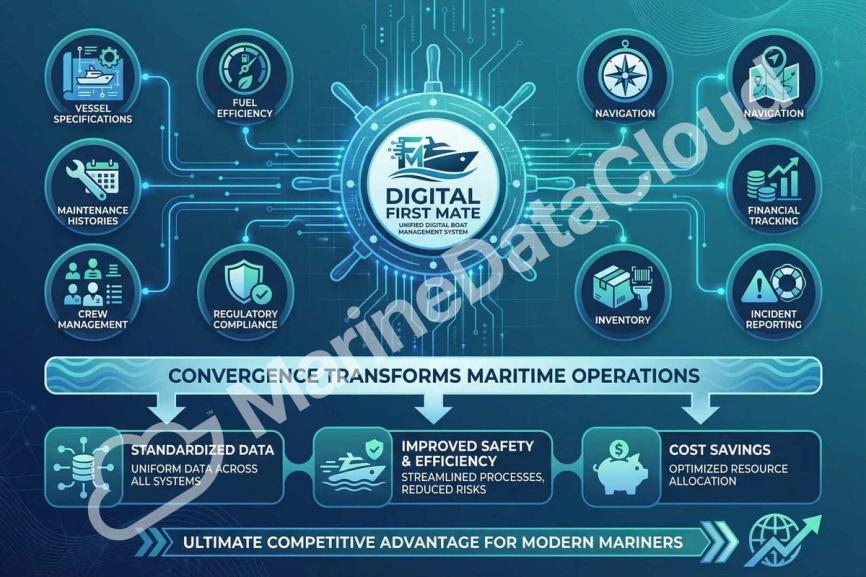
The maritime world has undergone a profound transformation over the past decade. Where captains once relied solely on paper logbooks, nautical charts, and handwritten maintenance schedules, today's forward-thinking vessel operators are charting a course towards comprehensive digital integration. This convergence of nine interconnected themes—from vessel specifications and maintenance tracking to crew scheduling, fuel optimisation, and regulatory compliance—represents nothing short of a revolution in how we manage our boats.
The transition to a fully digitally-managed vessel isn't merely about embracing technology for technology's sake. Rather, it represents a fundamental shift in mindset: the recognition that standardising and systematising boating data is the hallmark of a true modern mariner. Just as a well-rigged sailing yacht performs better in challenging seas, a well-organised digital vessel management system enables smoother operations across all aspects of boating—from day-to-day logistics to long-term strategic planning.
The Convergence of Digital Systems
Imagine having your entire vessel's narrative—its history, performance metrics, maintenance records, crew qualifications, inventory lists, and compliance documentation—accessible from a single unified platform. This isn't science fiction; it's the present reality for forward-thinking vessel operators who've embraced comprehensive boat management systems.
Vessel Specifications & Documentation: Your boat's technical blueprints, structural details, equipment manifests, and design specifications form the foundation of this digital ecosystem. Every dimension, weight calculation, and material specification serves as the digital anchor for everything that follows.
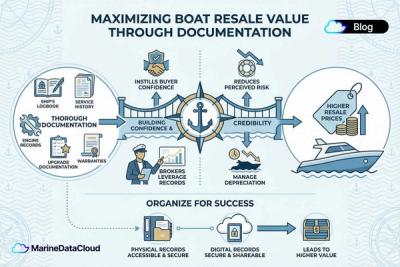
Maintenance & Service Histories: A comprehensive maintenance log transforms reactive repairs into proactive stewardship. When you systematise service records, you're not simply documenting what happened—you're creating predictive intelligence that prevents costly breakdowns and extends vessel longevity.
Crew Management & Qualifications: Modern vessels require certified, competent crew members. Digital tracking of certifications, training records, medical clearances, and experience logs ensures your team is always ship-shape and ready for any situation.
Fuel Efficiency & Performance Monitoring: Real-time tracking of fuel consumption, engine hours, route optimisation, and performance metrics transforms data into actionable insights. These analytics reveal patterns that lead to tangible cost savings and environmental responsibility.
Regulatory Compliance & Documentation: The maritime industry operates within a complex framework of international regulations, maritime laws, and safety standards. Centralised compliance tracking ensures you're always navigating within proper channels.
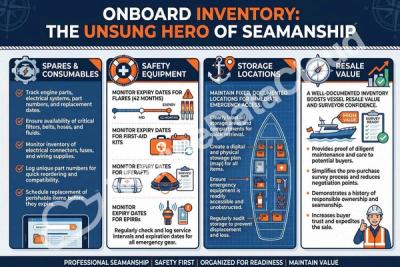
Inventory Management & Spares: From safety equipment to replacement parts, knowing exactly what's aboard and what needs ordering prevents operational disruptions and ensures readiness for any contingency.
Navigation & Route Planning: Historical voyage data, preferred routes, weather patterns, and waypoint libraries become invaluable intelligence when properly organised and analysed.
Financial Tracking & Budgeting: Monitoring operating costs, moorage fees, insurance, fuel expenditure, and maintenance budgets provides clear visibility into your vessel's financial performance.
Insurance & Incident Reporting: Complete incident histories, insurance documentation, and safety records create a comprehensive risk profile that's essential for claims processing and underwriting.
The True Value of Systematic Data Organisation
What makes this convergence truly transformative is how these nine elements work together. A maintenance record gains new significance when correlated with fuel consumption data. Crew qualifications become safety-critical when matched against specific vessel systems and emergency procedures. Navigation histories inform better route planning. Financial data becomes strategic intelligence when paired with performance metrics.
This interconnected web of information represents the digital nervous system of your vessel—the means by which every component communicates with every other component, creating a unified operational picture that no single isolated system could ever achieve.
Breaking the Digital Barrier
Many vessel operators hesitate at the threshold of comprehensive digitalisation. The learning curve seems steep. The migration from scattered spreadsheets and paper records feels daunting. Yet captains who've made the transition consistently report the same findings: the investment of time and effort during implementation yields exponential returns in operational efficiency, cost savings, safety improvements, and peace of mind.
The process is remarkably straightforward once you begin. Start by gathering your existing data—those scattered maintenance notes, specification sheets, certification documents, and logbook entries. Organise them into a unified system. Watch as previously hidden patterns emerge. Suddenly you can see precisely which systems require attention, which crew members are due for recertification, which routes consistently deliver better fuel efficiency, and which operational patterns drain your budget.
The Modern Mariner's Competitive Advantage
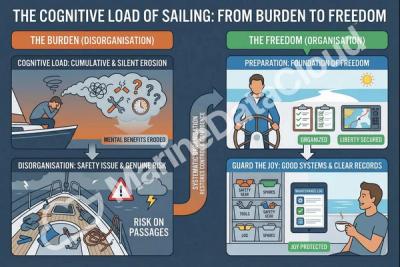
Standardising and systematising boating data isn't merely a chore—it's the competitive advantage that separates efficient, profitable vessel operations from those perpetually struggling with organisational chaos. The modern mariner recognises that a well-organised boat is a well-managed boat. A well-managed boat is a profitable boat. A profitable boat enables more time doing what you love: being on the water.
Whether you operate a commercial fishing vessel, a luxury superyacht, a cruising sailboat, or a family cabin cruiser, the principles remain identical. Digital integration transforms vessel management from an administrative burden into a strategic advantage.
Setting Sail into the Future
The fully digitally-managed vessel represents the convergence point of maritime tradition and technological innovation. It honours the time-tested wisdom of seamanship whilst embracing the transformative potential of modern data systems. It represents a navigational heading towards a future where every aspect of vessel operation is optimised, every decision is informed by data, and every mariner has a digital first mate standing watch.
This isn't about replacing human judgement—it's about augmenting it. It's about freeing captains and crew from administrative tedium so they can focus on what truly matters: safe, efficient, enjoyable time on the water. It's about transforming vessel management from a necessary overhead into a source of genuine competitive advantage.
Summary
The fully digitally-managed vessel represents the convergence of nine integrated systems—from vessel specifications and maintenance tracking to crew management, fuel optimisation, regulatory compliance, inventory control, navigation planning, financial tracking, and incident reporting. Modern mariners recognise that systematising and standardising boating data isn't a burdensome chore but rather the defining characteristic of professional, forward-thinking vessel operation. By bringing together all aspects of boat management into a unified digital ecosystem, operators gain unprecedented visibility into their vessel's performance, safety profile, and financial efficiency. This digital integration transforms reactive, scattered administrative processes into proactive, interconnected strategic intelligence. The investment in comprehensive boat management systems yields exponential returns through improved safety, reduced costs, enhanced compliance, and ultimately, more time doing what truly matters: enjoying the sea. Today's modern mariner understands that a well-organised boat is the foundation of operational excellence, and digital systematisation is the compass pointing towards that horizon.