Your Boat, Your Data: Building the Ultimate Digital Vessel Profile
The 21st-Century Ship's Log Has Arrived — Are You Ready?
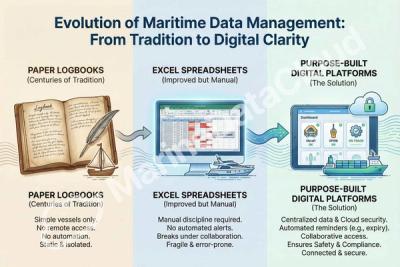
There is a tradition as old as blue-water sailing itself: the ship's log. From the battered leather-bound journals of circumnavigating sloops to the brass-fitted deck logs of ocean-going steamers, the record of a vessel's life has always been sacred. Every nautical mile run, every squall weathered, every repair carried out — noted, dated, and preserved. The ship's log was, and remains, the living biography of a vessel.
But here is the hard truth that every modern skipper must reckon with: the paper logbook is no longer enough. Today's recreational vessel is a sophisticated machine. It carries layered electronics, complex propulsion systems, composite or alloy structures, safety equipment with staggered certification cycles, insurance policies with precise compliance requirements, and a web of maintenance schedules that no single notebook — however faithfully kept — can reliably track. The question is no longer whether to go digital. The question is: do you actually have all of your boat's critical data in one secure, accessible, and organised place? If your honest answer is anything other than a confident "yes," read on.
From Paper to Profile: What a Digital Vessel Record Really Contains
Think of a digital vessel profile as the master chart of your boat's entire existence. Just as a nautical chart encodes water depth, hazard positions, and safe passages into a single authoritative document, a complete digital record encodes every dimension of your vessel's identity, condition, and history into one coherent, searchable archive.
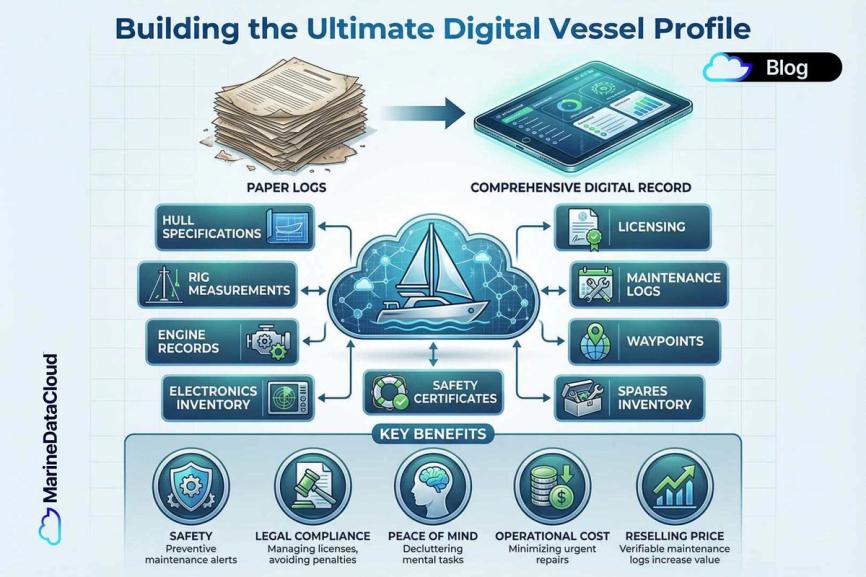
A truly comprehensive digital vessel profile should encompass:
- Hull specifications — material (GRP, carbon fibre, aluminium, steel, wood-epoxy composite), construction method (hand-laid, infusion, cold-moulded), LOA, LWL, beam, draught, and displacement
- Rig measurements — mast height above waterline, forestay and shroud lengths, sail plan areas, spar materials, and standing rigging service dates
- Engine records — make, model, serial number, installation date, running hours, service intervals, impeller changes, injector overhauls, and coolant flushes
- Electronics inventory — chartplotter firmware versions, AIS transponder MMSI registration, VHF DSC certification, radar model and calibration records
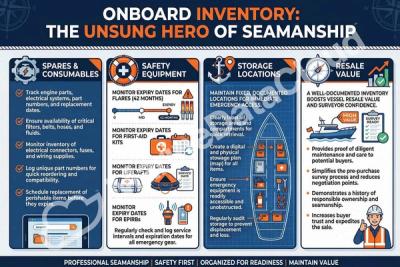
- Safety certificates — life raft service tags and re-certification dates, EPIRB registration and battery expiry, flare pack batch numbers and expiry dates, fire extinguisher inspection stamps, first aid kit contents and expiry
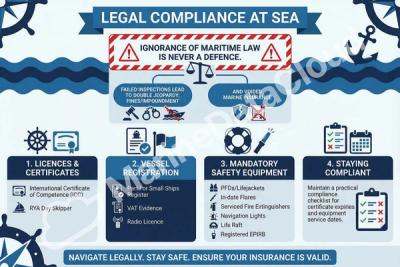
- Licensing and legal documentation — vessel registration, Certificate of Competence, coastal radio licence, insurance policy details, survey certificates, port entry permits
- Maintenance logs — a timestamped, chronological record of every scheduled and corrective task ever performed aboard, ideally with parts references and service provider details
- Waypoints and passage records — a record of the miles made good, anchorages visited, and routes sailed, forming the nautical biography of the vessel
- Spares inventory — what is aboard, where it is stowed, and when consumables expire
Each one of these data categories, considered in isolation, is useful. Considered together, they form something far more powerful: a living, breathing vessel intelligence system — a digital twin of your boat's operational reality.
Why Organisation Is a Safety Issue, Not Just a Convenience
It is tempting to frame digital boat management as a matter of personal organisation — tidy minds keeping tidy records. But the stakes are considerably higher than tidiness. Systems need to be operational, and scheduled preventive maintenance is, in many cases, a manufacturer's requirement to keep warranties valid. Allow a life raft's service certification to lapse, and you may find your insurer declining a claim at precisely the moment you can least afford it. Fail to document an engine overhaul, and a coastguard inspection may raise questions you cannot answer. Allow a fire extinguisher to slip past its inspection date and you create a legal liability as well as a genuine hazard.
A well-documented maintenance history does more than satisfy bureaucratic requirements — it is empirical proof that your vessel is seaworthy. Port State Control inspections increasingly expect digital records, analytics-backed maintenance histories, and equipment performance data spanning years. The direction of travel for the entire maritime world — commercial and recreational alike — is unmistakably towards structured, verifiable, digital record-keeping. The serious skipper who gets ahead of that curve now is the one who sails with genuine peace of mind.
The Resale Argument: Data Is Money
Here is a figure worth considering: a well-maintained yacht with a full, verifiable service history commands a meaningfully higher price on the brokerage market than an equivalent vessel with patchy paperwork. A potential buyer, broker, or insurance surveyor is, in essence, attempting to reconstruct the life of the vessel from available evidence. Your digital vessel profile is that evidence, presented completely and without ambiguity.
A comprehensive record demonstrates:
- Every system has been maintained on schedule, with proper parts and approved procedures
- Equipment condition is the best it can be, because failures have been minimised through diligent preventive maintenance
- The full inventory — systems, spares, part numbers, expiry dates, documentation — is accounted for and catalogued
- The asking price is not mere optimism; it is a justified, evidence-backed figure
Preventive maintenance is demonstrably cheaper than corrective maintenance — you avoid the eye-watering cost of urgent haulouts, rushed spares orders, and emergency yard fees that erode both your budget and your enjoyment of the water. Track costs, schedule tasks, and retain the documentation, and you are not simply managing a hobby — you are stewarding a significant asset.
The Skipper's Challenge: Closing the Data Gap
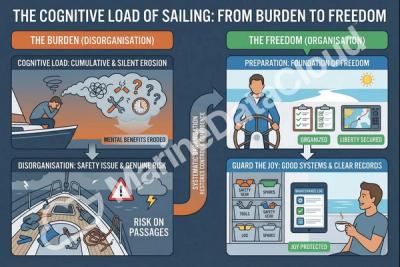
So where does the typical recreational skipper actually stand? The honest picture is often this: hull spec sheets filed in a folder ashore, engine service stamped in a paper book aboard, insurance documents in an email somewhere, and the life raft expiry date written in pencil on the cabin bulkhead. The information exists — but it is scattered, siloed, and dangerously vulnerable. A single flood, fire, or theft could wipe out years of records in an instant.
The 21st-century digital vessel profile solves this with a single, elegant principle: one place for everything, accessible from anywhere, with timely alerts so nothing slips through. When your boat-management platform carries reminders for every expiring certificate, every upcoming service interval, and every scheduled inspection, your mind is freed from the burden of holding it all. Cruising becomes what it was always supposed to be — an experience of freedom, focus, and tranquillity on the water — rather than a nagging catalogue of tasks half-remembered and half-forgotten.
The tools available to today's skipper make this transition straightforward. Register your hull details, upload your documents, log your engine hours, photograph your safety equipment, set your expiry reminders, and capture your passages. Do it once, do it properly, and then let the system carry the weight.
Point the Bow Towards a Better-Organised Horizon
The ship's log has always been about accountability — to the vessel, to the crew, and to the sea itself. The digital vessel profile is simply that same discipline, brought fully into the modern age: organised, intelligent, and equal to the complexity of the boats we sail today.
Every nautical mile of data your vessel generates — from the first splash of a new antifouling coat to the final waypoint of a bluewater passage — deserves to be recorded, secured, and made useful. A serious skipper does not leave their navigation to chance; neither should they leave their data management to improvisation.
The horizon ahead is brighter, better-organised, and well within reach. It is time to build your ultimate digital vessel profile — and sail towards it with confidence.
Summary: Key Takeaways for the Modern Skipper
- A digital vessel profile is the 21st-century evolution of the ship's log — comprehensive, searchable, and always accessible
- It should cover hull specs, rig measurements, engine records, electronics, safety certificates, legal documents, maintenance logs, spares inventory, and passage records
- Organised data is a safety matter — expired certificates, missed service intervals, and lapsed insurance compliance create real-world risk
- A full, verifiable maintenance history directly increases resale value and simplifies survey and brokerage processes
- Preventive maintenance, properly scheduled and documented, is substantially cheaper than corrective repairs
- Scattered, paper-based records are a single disaster away from being lost — centralised digital storage protects your investment
- Timely alerts and reminders free your mind from the mental burden of tracking tasks, delivering genuine peace of mind on passage
- The direction of the entire maritime world — from commercial shipping to recreational yachting — is towards structured, digital, verifiable record-keeping
- The time to build your digital vessel profile is not tomorrow — it is now, before the next inspection, the next passage, or the next sale